Client
ArtlogicProject
Private ViewsRole
Lead Product DesignerType
Product Design, UX, SaaSOverview
Reimagining an established art-world experience
The Feature
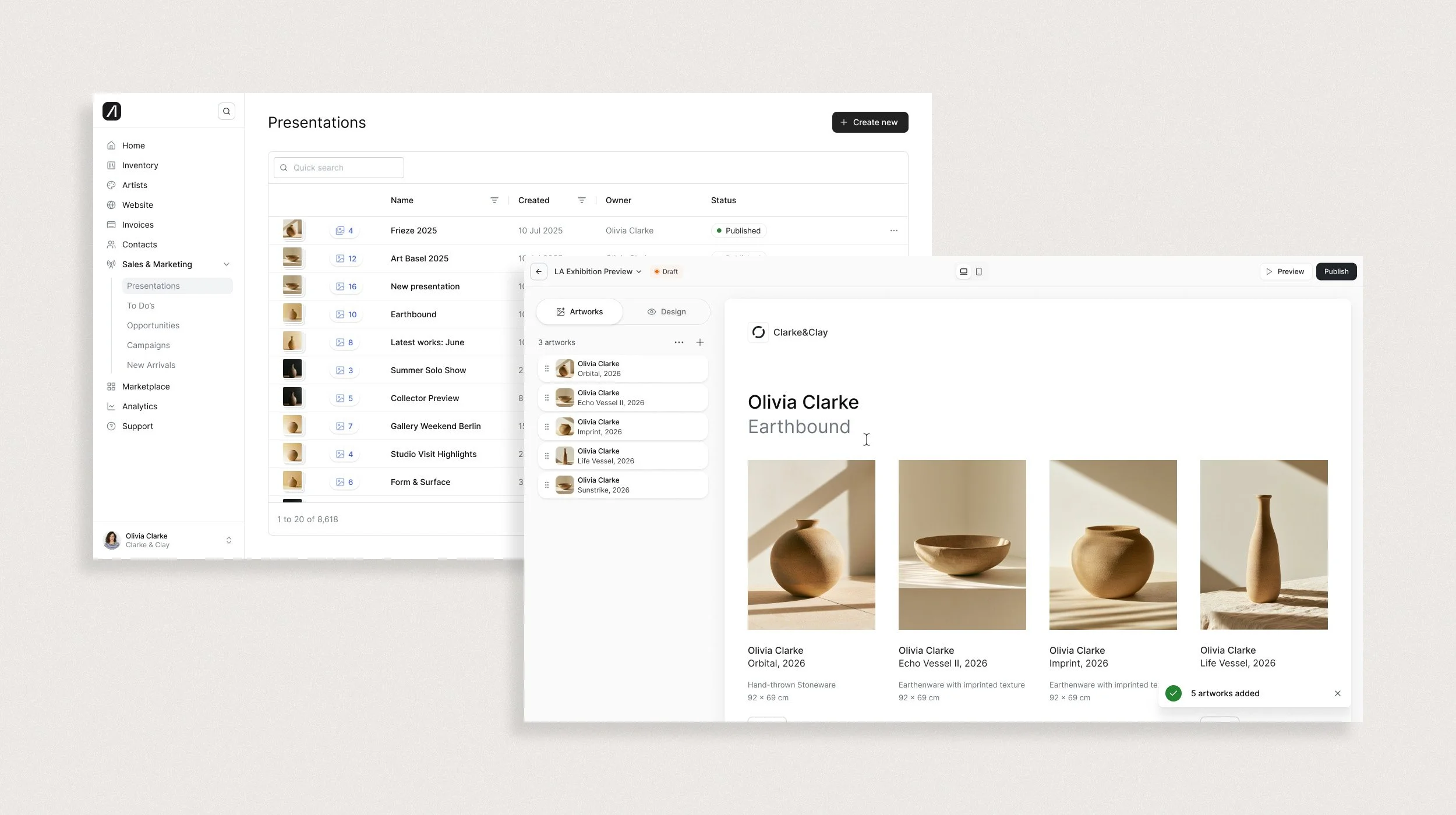
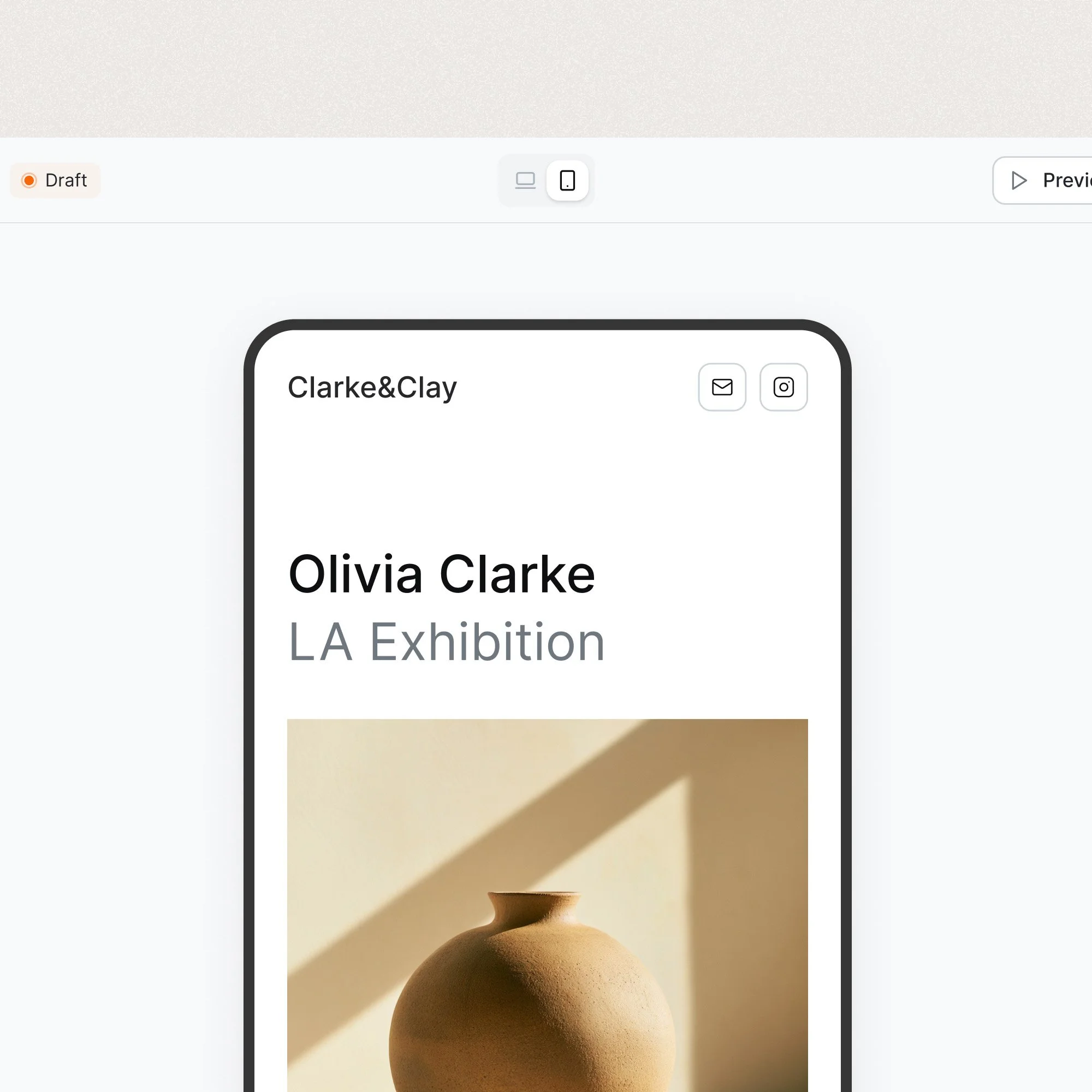
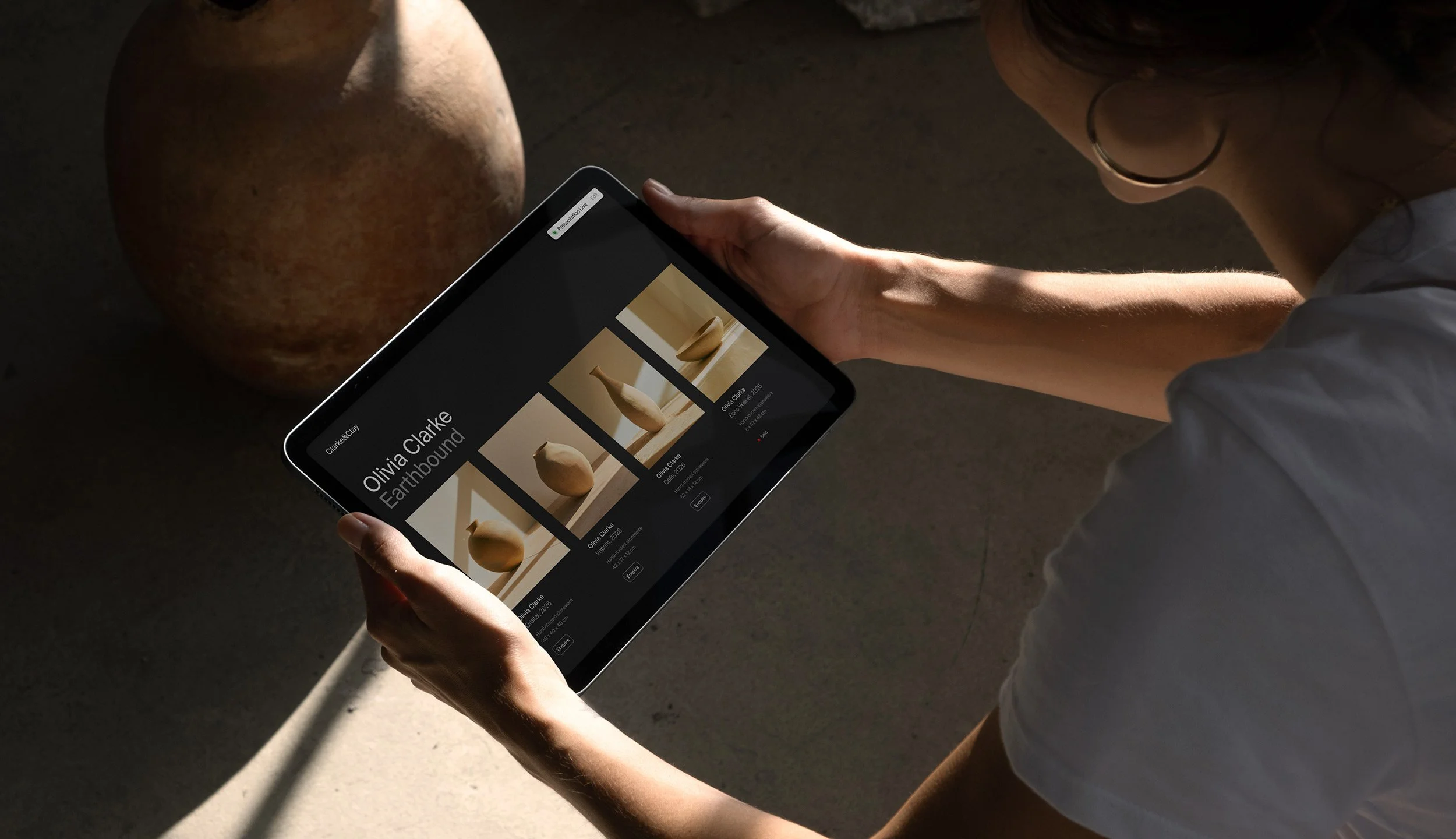
Private Views is a feature that allows galleries to put together attractive presentations, comprised of artworks from their Artlogic inventory platform. These can then be shared with customers and contacts for a variety of uses - particularly in the sales & marketing flow. It brings the experience of a private viewing into a flexible digital format.
The Brief
Private Views was an established and widely used part of the product, but with strong customer demand for further improvements and new opportunities afforded by platform modernisation. The challenge was to reimagine the experience for its next stage of evolution, balancing greater flexibility and capability with the speed and simplicity that made it successful.
My Role
I led the discovery, product strategy and design of the next generation of Private Views, working closely with Product, Engineering and Marketing from early opportunity definition through to prototype, validation and launch planning.

Curate
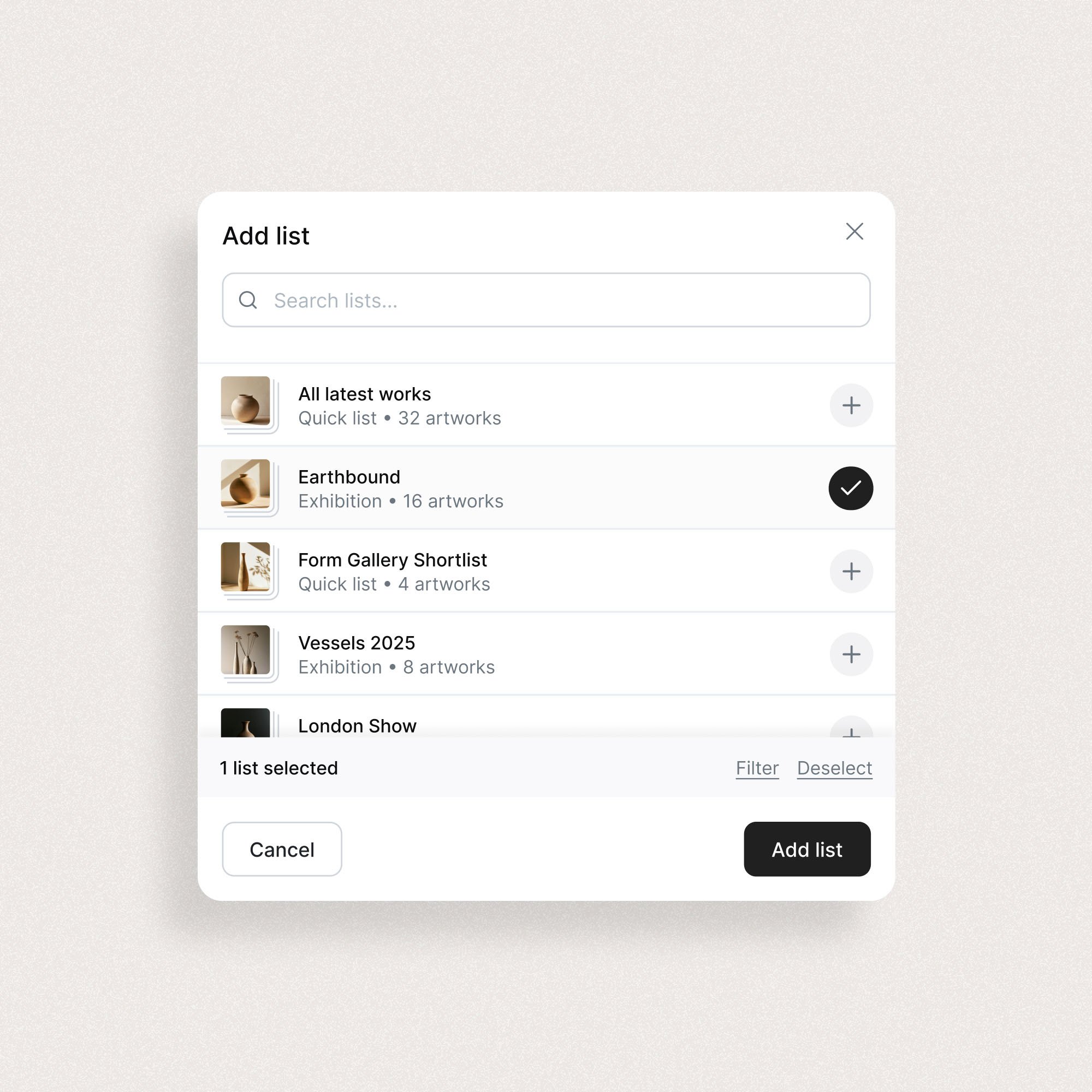
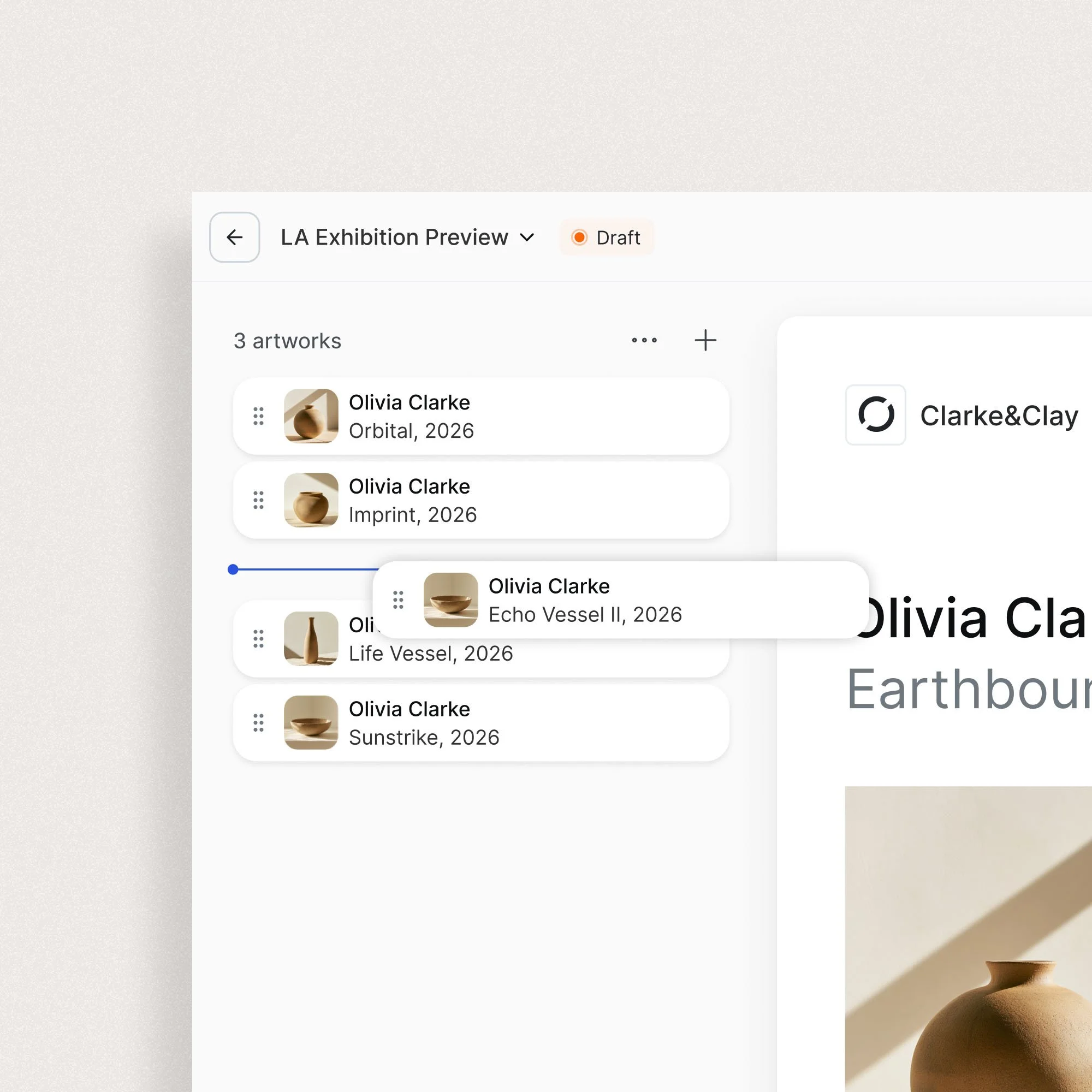
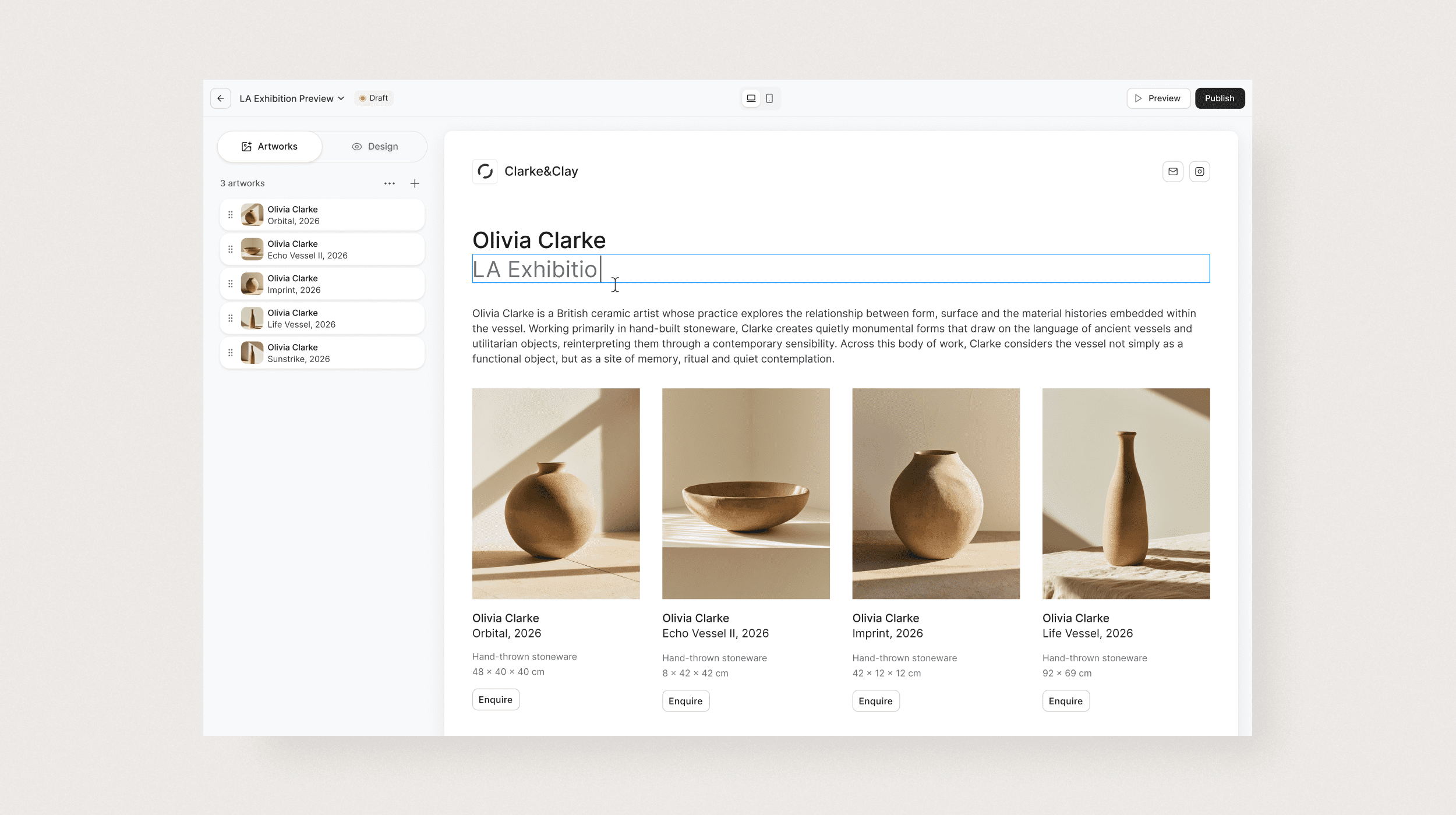
Select and arrange artworks into a presentation, with the flexibility to add content and style the experience.

Share
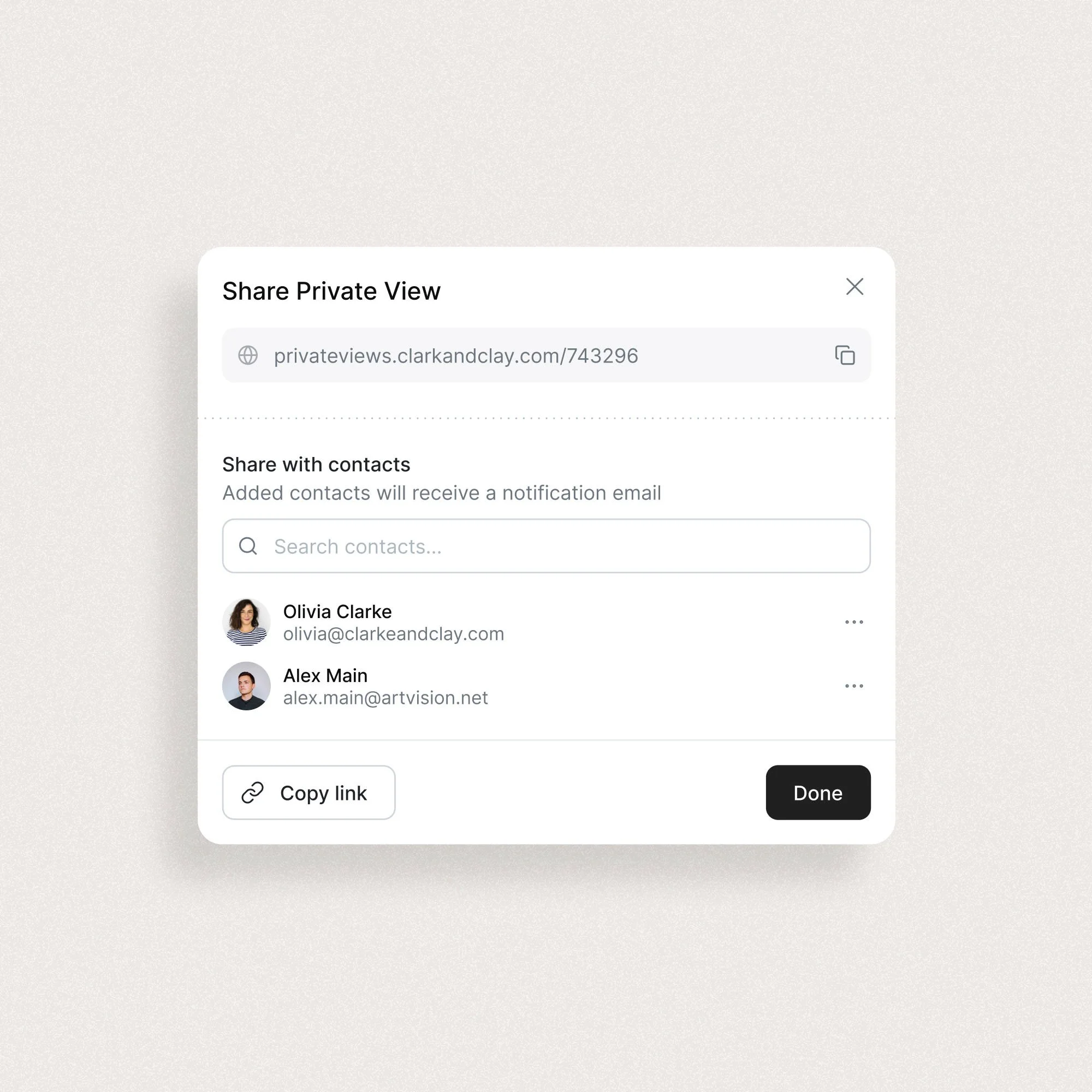
Move from draft to live in one flow. Publish and share a link directly with a client, or send from within a conversation.

Measure
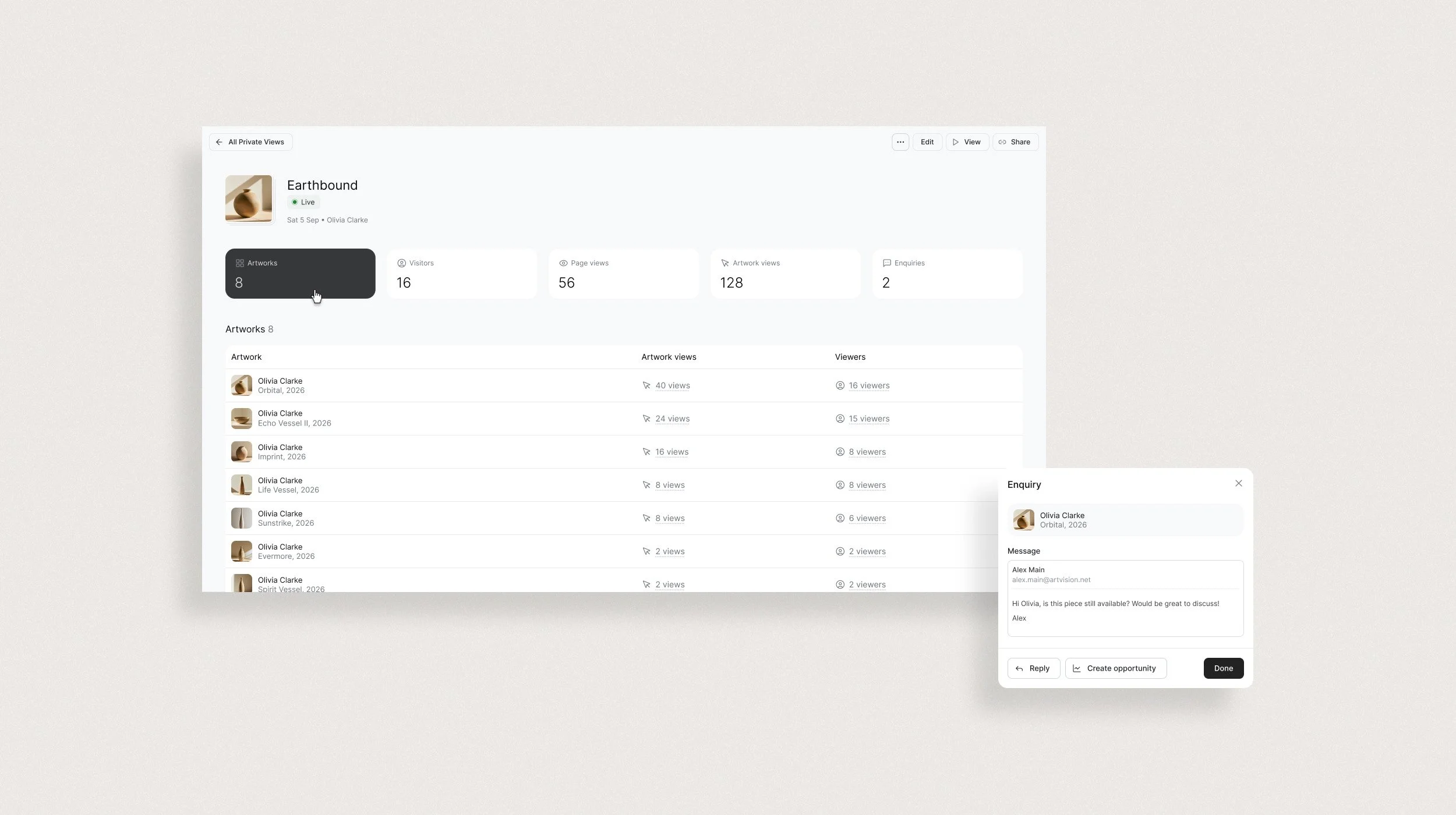
See how buyers are engaging and which artworks are attracting attention, then translate these into CRM opportunities.
Discovery & Insights
Understanding the opportunity

01
Product data confirmed Private Views was already a high-value workflow
To identify opportunities for platform modernisation, I analysed product usage, feature gaps and customer needs to identify the strongest opportunities for investment. Private Views emerged as a clear candidate.
Usage data showed broad adoption and high volumes of presentations being created by customers — evidence that the feature was already embedded in how many galleries worked.
02
Balancing customisation with simplicity was key
Customer feedback pointed towards the need for greater customisation, but usage data told a more nuanced story. Most presentations were created quickly using a relatively small set of settings, while only a minority were heavily customised.
Bringing these signals together revealed a key design tension: give customers more control without making the common path harder or slower.
03
The opportunity extended beyond the presentation itself
To understand why some customers were creating such high volumes of Private Views, I identified high-volume accounts and we interviewed the people using the feature day to day. Their workflows revealed that Private Views played several roles throughout the sales process — from initial presentations and follow-ups to more targeted conversations with prospective buyers.
I mapped these workflows to uncover opportunities beyond the presentation itself, opening up a broader view of how the product could support the sales journey.
AI-assisted design
Exploring and testing ideas faster
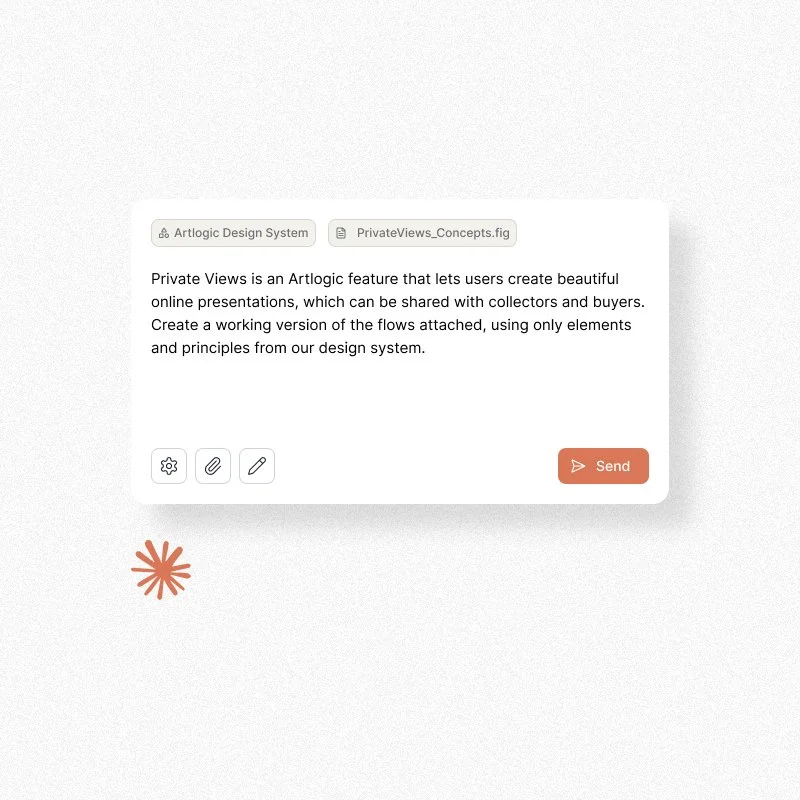
Collaborative Ideation
AI gave us a fast way to explore different approaches and opened early ideation to the whole team. Many ideas were discarded, but the process helped throw out various idea we might otherwise not have thought of. We combined the strongest ideas with our own thinking to define the direction for the first version.
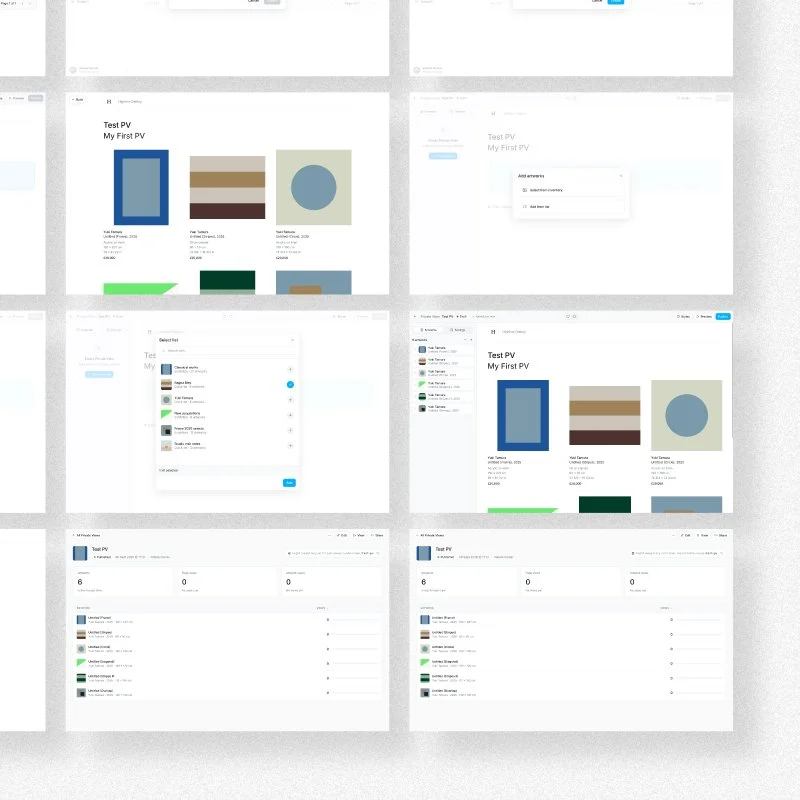
Rapid prototyping
I was able to turn ideas into high-fidelity, interactive prototypes in hours rather than weeks. This made it possible to experience and assess ideas as working flows rather than static screens. It shortened the distance between a design hypothesis and something we could actually test.
Fast feedback
Working prototypes could be put in front of internal teams and customers much earlier, allowing us to gather feedback while ideas were still cheap to change. Each round of feedback helped us refine the interaction, challenge assumptions and decide what was worth taking forward.
Concept Design
Bringing the ideas together